
STAGE 01 · RINSE

PreClean - Traffic Film Remover (non caustic)
Cool the wheels and rinse off the loose grit so the cleaner works on what is actually stuck.
£15.95
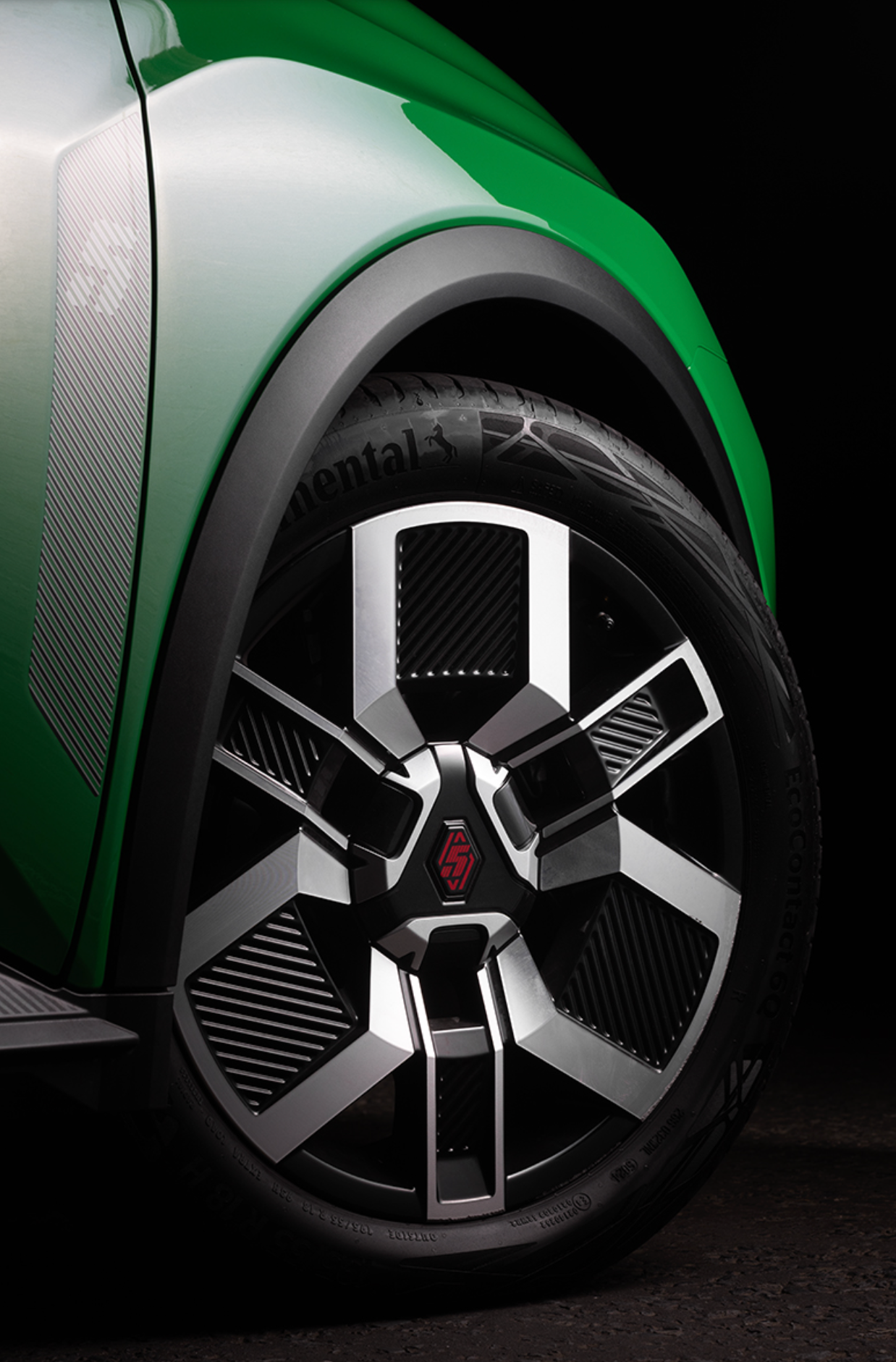
The safest way to clean alloy wheels is a non-acid wheel cleaner sprayed onto cool, rinsed wheels, agitated with dedicated brushes, then rinsed off. Where brake dust has bonded into the finish, follow with an iron fallout remover, which dissolves embedded iron that a normal wheel cleaner cannot lift.
Hot iron particles embed into the finish. That is why a normal wash leaves wheels looking grey no matter how hard you scrub.
Acid cleaners work fast but are unforgiving on lacquered, polished and diamond cut finishes. Non-acid gives you margin for error.
Product dries and etches on a hot rim straight off a drive. Let the wheels cool, then rinse before anything else goes on.
Do the wheels before the paint, with brushes that never touch the bodywork, so brake dust is not splashed onto clean panels.
Use Cleanse as your regular non-acid wheel and tyre cleaner, Purge when brake dust has bonded into the finish and needs an iron fallout remover, and run both together when wheels have been neglected for a season.
A wheel cleaner and an iron fallout remover are not the same product and they are not interchangeable. One lifts what is sitting on the surface. The other dissolves what has embedded into it. Most wheels that look permanently dull need the second one.

Our non-acid wheel and tyre cleaner. Dilutes down for weekly use and is the one to reach for when the wheels are dirty rather than neglected.

Our iron fallout remover. It reacts with embedded iron particles and turns purple as it works, lifting the contamination a wheel cleaner leaves behind.

Protection for cleaned wheels. A protected face gives brake dust less to key into, so the next clean takes a fraction of the effort.
Diamond cut, polished, anodised and matt finishes are less tolerant than standard painted and lacquered wheels. Always follow the dilution on the label, test on a small area first, and check your wheel manufacturer's guidance if you are unsure what finish you have.
Brake dust is hot metal particles shed by the brake pads and discs, which embed into the wheel finish as they cool, so a normal wash cannot lift them.
Every time you brake, the pad and disc shed a fine spray of iron. It leaves the brake at temperature, hits the wheel and cools on contact, and in cooling it keys into the paint, lacquer or bare metal of the face. It is not sitting on the surface like road dirt. It is partly in the finish.
That is why a bucket of shampoo and a sponge never fully works. You are washing the surface while the contamination sits just below it, which is what gives a neglected wheel that permanent grey cast even when it is technically clean.
It also matters beyond looks. Left long enough, embedded iron holds moisture against the finish, and on a wheel with any chip or kerb damage that is where corrosion starts.
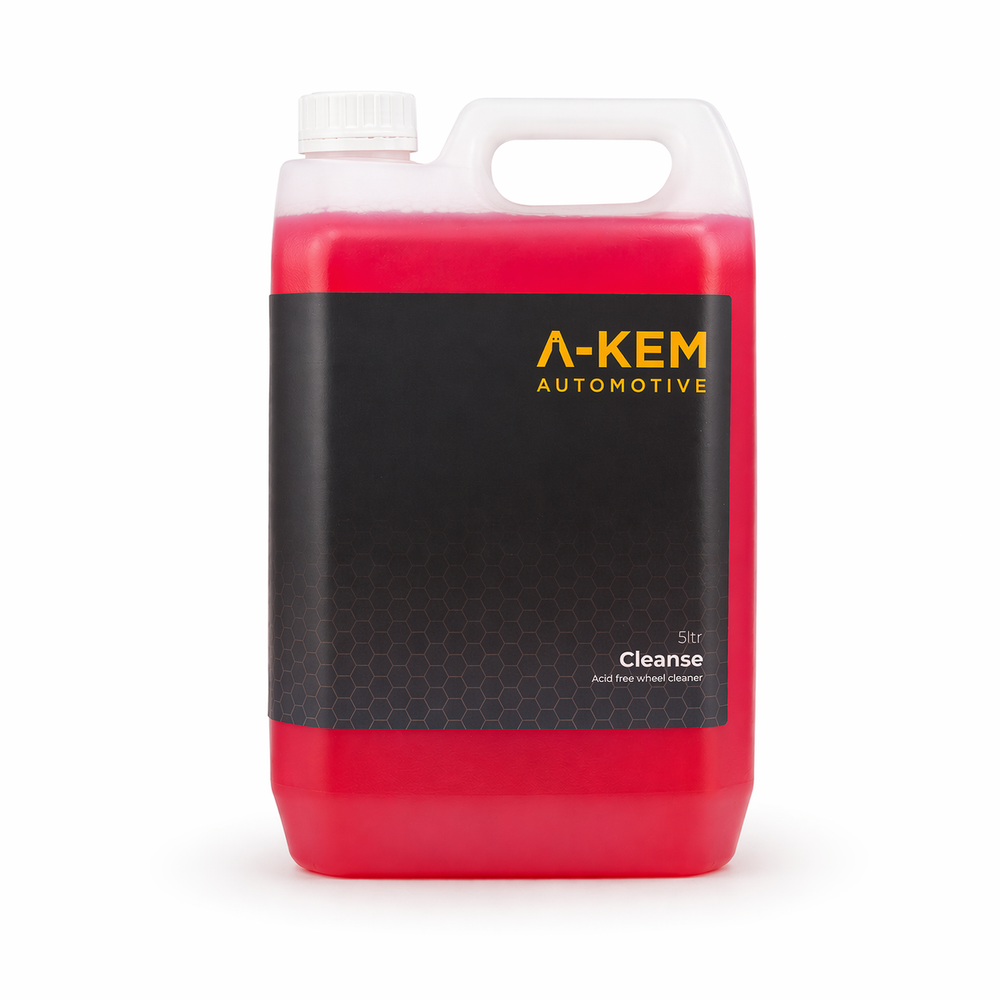
Acid based alloy wheel cleaners clean quickly but carry a real risk of staining or etching diamond cut, polished, anodised and matt finishes, which is why a non-acid cleaner is the safer default for home use.
Acid cleaners earned their place in commercial wash bays, where wheels are filthy, time is short and the operator does the same job a hundred times a week. Used correctly and rinsed fast they work. The problem is the margin for error, which is almost nothing.
Leave an acid cleaner a minute too long, use it in the sun, or put it on a finish it was never intended for, and the damage is permanent. Diamond cut wheels are the classic casualty, because the lacquer over the machined face is thin and once it is breached the alloy underneath starts to bloom.
A non-acid cleaner such as Cleanse asks for a little more dwell time and a little more agitation. In exchange, a mistake costs you nothing. On a car you own and intend to keep, that is the trade worth making.
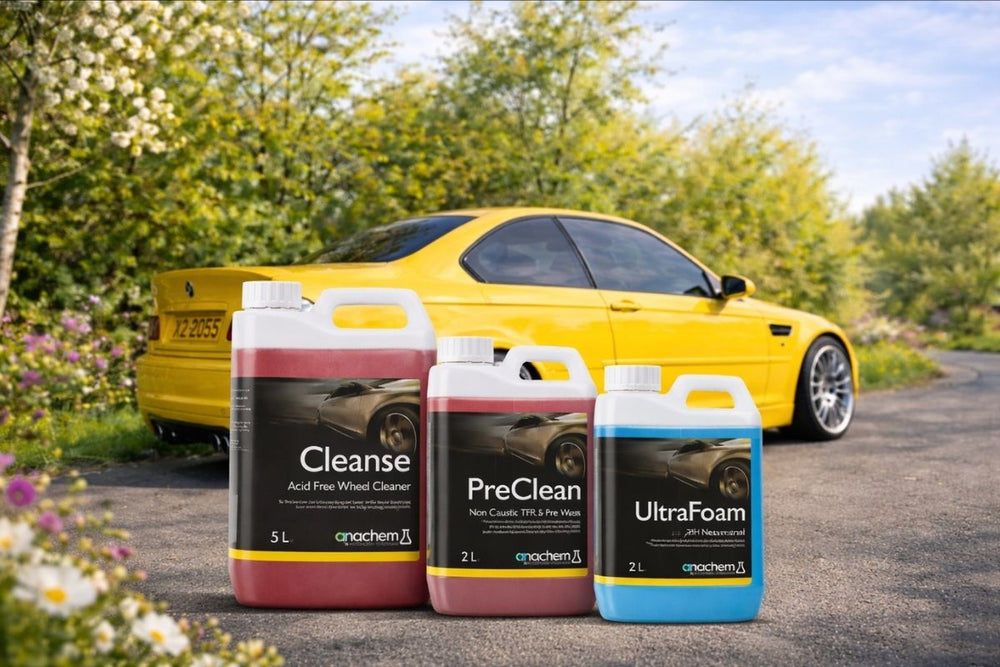
An iron fallout remover chemically dissolves the iron particles embedded in the finish, whereas a wheel cleaner only lifts the dirt and dust sitting on top of it.
The two products are doing completely different jobs. A wheel cleaner is a detergent. It breaks down road film, oily residue and loose brake dust so it can be rinsed away. Very effective on what is on the surface, and no use at all on what is in it.
An iron fallout remover works chemically. It reacts with the embedded iron and breaks the bond holding it in the finish, and you can watch it happen: the product turns deep purple as it goes to work. That colour is the reaction, not a dye, and it is a genuinely useful indicator of how contaminated a wheel actually was.
Purge is our iron fallout remover, and on a set of wheels that have never been decontaminated the result is usually a shade or two lighter than the owner expected. Most people only need it a few times a year, with Cleanse doing the weekly work in between.
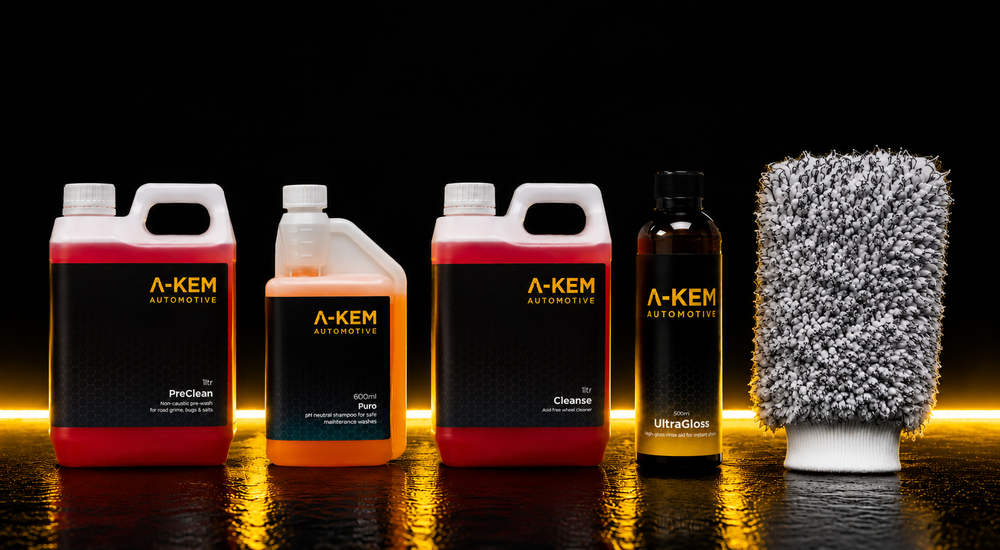
Clean alloy wheels at every wash, and decontaminate them with an iron fallout remover a few times a year, or more often through winter when salt and brake dust are heaviest.
Wheels get dirtier faster than any other part of the car and they are the part most people leave longest. A regular clean with a diluted non-acid cleaner takes a few minutes per corner and stops contamination ever getting established.
The decontamination step is different. It is a periodic reset rather than a weekly job. If the wheels still look dull after a normal clean, that is the signal, and through a UK winter of salted roads you will hit that point sooner.
Protection changes the maths considerably. A protected wheel face gives brake dust far less to key into, which turns a hard scrub into a rinse and a wipe. It is the single thing that makes wheels stop being the job everyone dreads.
A full wheel clean runs in five stages: rinse the wheels cool, clean with a non-acid wheel cleaner, decontaminate with an iron fallout remover, rinse and dry, then protect the face so the next clean is easier.
Cool the wheels and rinse off the loose grit so the cleaner works on what is actually stuck.

Non-acid wheel and tyre cleaner, agitated into the barrel, spokes and around the bolts.

Iron fallout remover for the bonded brake dust a wheel cleaner will never move on its own.

Clean and dress the tyre wall so the whole corner of the car looks finished rather than half done.

Protect the clean face. Brake dust has less to key into and the next clean takes minutes rather than an afternoon.
Clean alloy wheels by letting them cool, rinsing off loose grit, spraying a non-acid wheel cleaner, agitating the face, barrel and bolts with dedicated brushes, rinsing thoroughly, then treating any remaining brake dust with an iron fallout remover before drying and protecting.
Never spray anything onto a hot wheel straight off a drive. Product dries almost instantly on a hot rim, which is how staining and etching happen. Park up, let the wheels come down to ambient temperature, and work in the shade.
Rinse each wheel down, including the barrel and the arch behind it, before any chemical goes on. That takes the loose material away so the cleaner spends its dwell time on the film and brake dust that is actually bonded.
Cleanse is our non-acid wheel and tyre cleaner and dilutes down for regular use. Cover the face, then the barrel, then the tyre wall, and give it the dwell time on the label. Do one wheel at a time so nothing dries.
Shop wheel cleanersUse a soft face brush on the outer, a long barrel brush behind the spokes and a small detail brush around the bolts and valve. Keep these brushes for wheels only. A brush that has been on a wheel should never touch paint.
Rinse each wheel completely, working into the barrel and behind the spokes where product collects. Residue left to dry in the recesses is what leaves streaks and dull patches once the wheel is dry.
If the wheels still look grey, spray Purge onto the cool, damp wheel and let it dwell. It will turn purple as it reacts with embedded iron. Rinse it off thoroughly and repeat on a badly neglected set rather than leaving it on longer.
Shop iron fallout removerDry the wheels with a dedicated microfibre so water does not spot in the recesses, then protect the face. Protection is what stops the next set of brake dust bonding, and it turns the following clean into a five minute job.

A non-acid wheel cleaner is safe to use on every common alloy wheel finish, while acid based cleaners carry real risk on diamond cut, polished, anodised and matt wheels.
Finish matters more than wheel brand. If you are not certain which finish you have, treat it as the most delicate option in the list and work from there.
| Wheel finish | Non-acid cleaner | Acid based cleaner | Notes |
|---|---|---|---|
| Diamond cut | Safe, use as directed | Avoid | The lacquer over the machined face is thin. Once breached, the alloy underneath corrodes and the wheel needs refurbishing. |
| Polished alloy | Safe, use as directed | Avoid | Often unlacquered, so acid can dull and stain the surface permanently. |
| Anodised | Safe, use as directed | Avoid | The anodised layer is chemically sensitive and cannot be restored once damaged. |
| Matt and satin | Safe, avoid heavy scrubbing | Avoid | Aggressive product and hard agitation both create shiny patches that cannot be blended out. |
| Chrome and chrome effect | Safe, use as directed | Avoid | Acid attacks the plating and lifts it from the substrate. |
This table is general guidance for common finishes. Your wheel manufacturer's own advice and the product label always take priority. Test any product on a small hidden area before doing a full set.
For home use the best alloy wheel cleaner is a non-acid formula that is safe across every common wheel finish, because it removes brake dust and road film without the risk an acid cleaner carries on diamond cut, polished and anodised wheels. Pair it with an iron fallout remover for bonded contamination.
Acid based wheel cleaners can stain or etch diamond cut, polished, anodised and matt finishes, and the damage is permanent. They clean quickly but leave almost no margin for error on dwell time or temperature. A non-acid cleaner is the safer choice for anyone cleaning their own car.
The purple colour is an iron fallout remover reacting with embedded iron particles in the wheel finish. It is the chemical reaction working, not a dye, and the intensity of the colour tells you how much bonded brake dust was there. Rinse it off thoroughly once it stops developing.
Remove brake dust by rinsing the cool wheels, spraying a non-acid wheel cleaner, agitating the face, barrel and bolts with dedicated brushes, then rinsing thoroughly. If the wheels still look grey afterwards, the remaining brake dust is embedded and needs an iron fallout remover to dissolve it.
Use only a non-acid wheel cleaner on diamond cut wheels, applied as directed and rinsed thoroughly. The lacquer over the machined face is thin, and once an acid cleaner breaches it the alloy underneath begins to corrode, which can only be put right by refurbishing the wheel.
Clean alloy wheels at every wash to stop brake dust becoming established, and use an iron fallout remover a few times a year when they still look dull after a normal clean. Through a UK winter of salted roads you will need to decontaminate more often.